
DSA (IN JAVA) AtoZ Notes
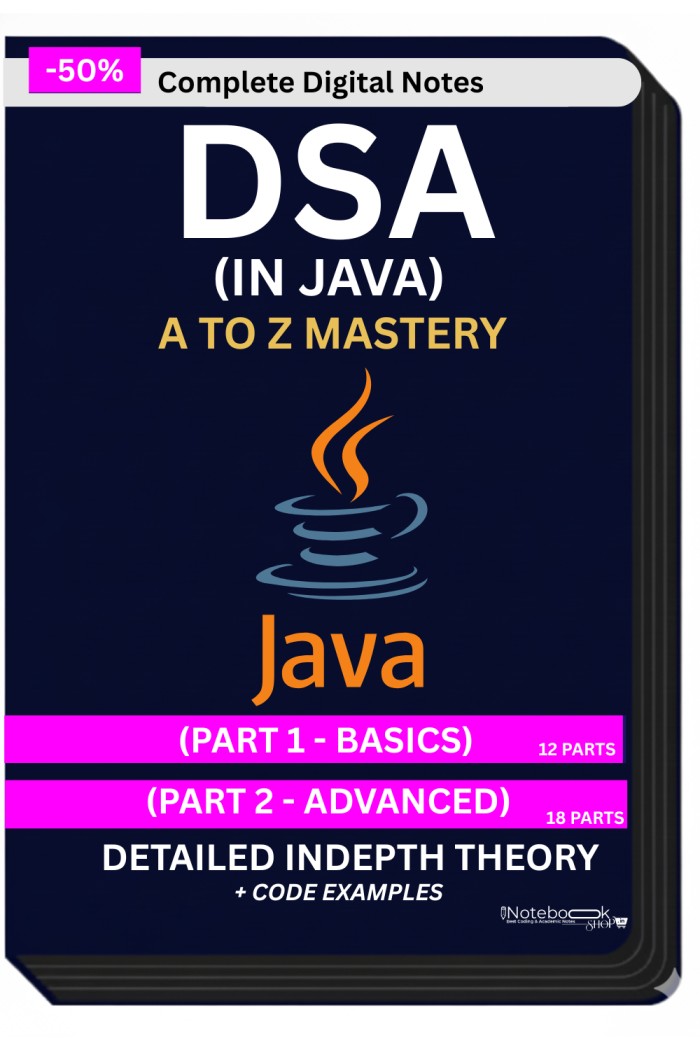
DSA (IN JAVA) AtoZ Mastery Notes 
Master DSA (IN JAVA) in One Place — 30 Parts of Lessons with Detailed, Indepth Theory + Code Examples + Important Interview Oriented Key Q&As ⭐
Syllabus Included in this Ebook👇
Data Structures & Algorithms (DSA) in Java Index
Basics – Includes 12 Parts
Advanced – Includes Next 18 Parts
In Total: 30 Parts, ~75 Pages (Updated)
Phase I: Foundations & Analysis (Parts 1-4)
Focus: Prerequisites, performance measurement, and recursion basics
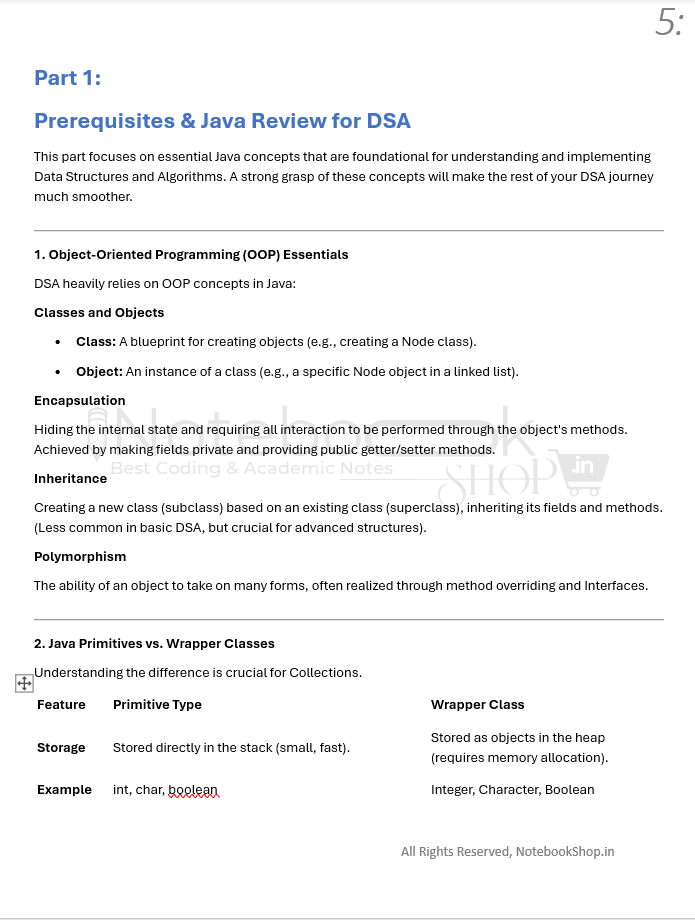
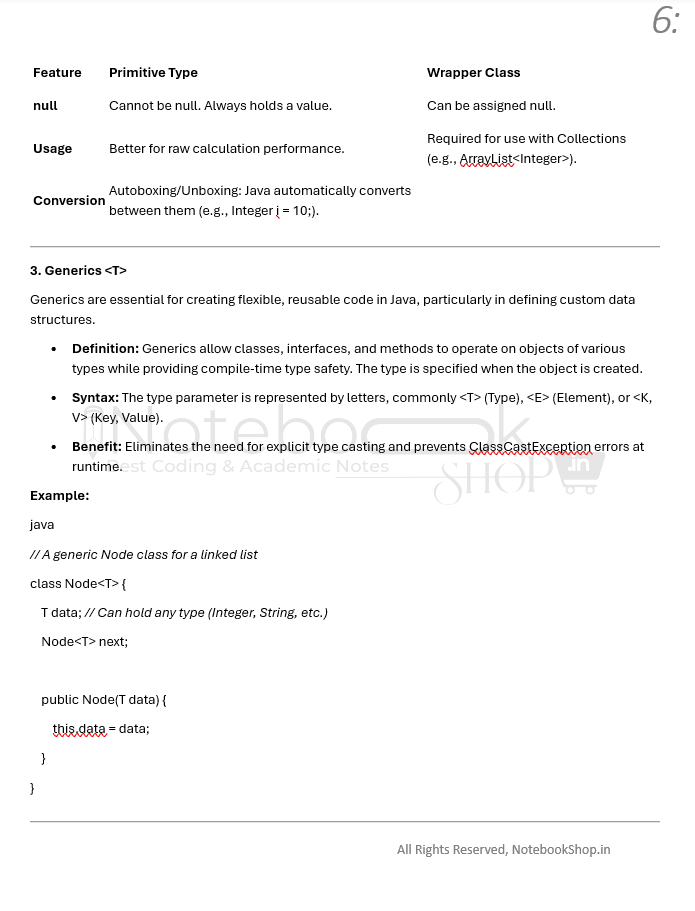
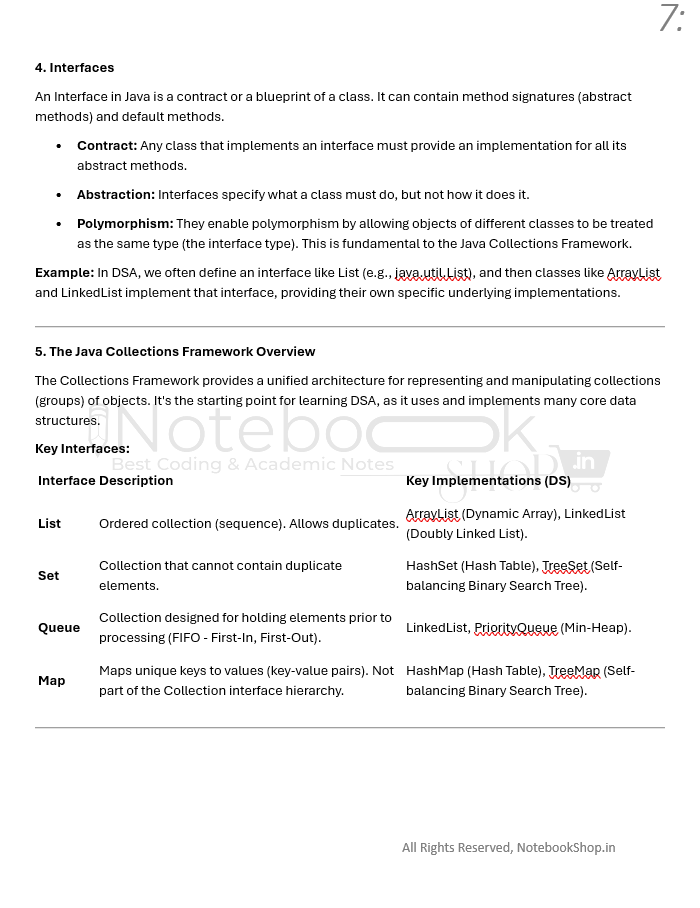
Part 1: Prerequisites & Java Review
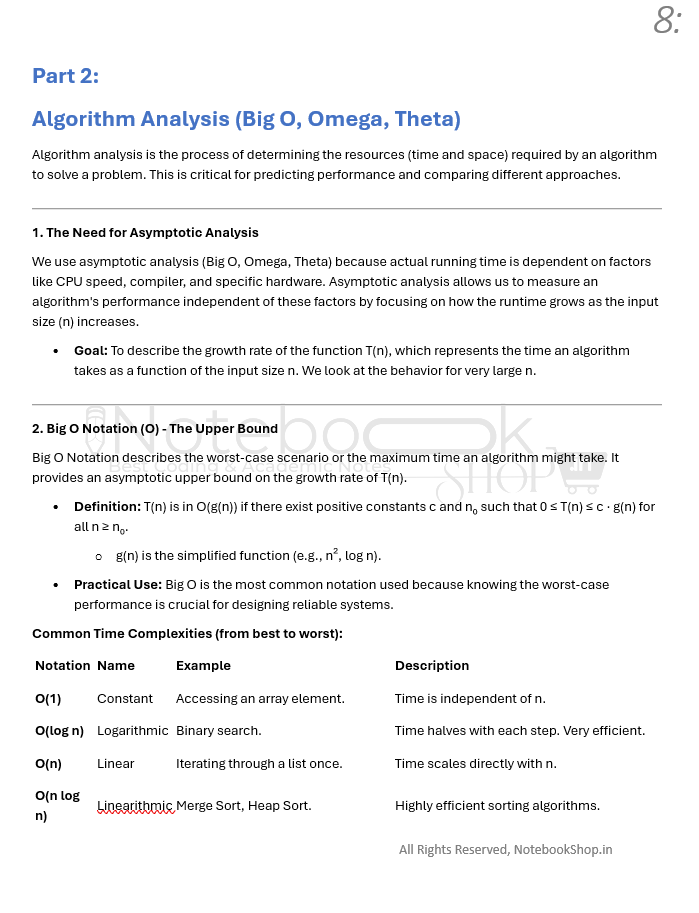
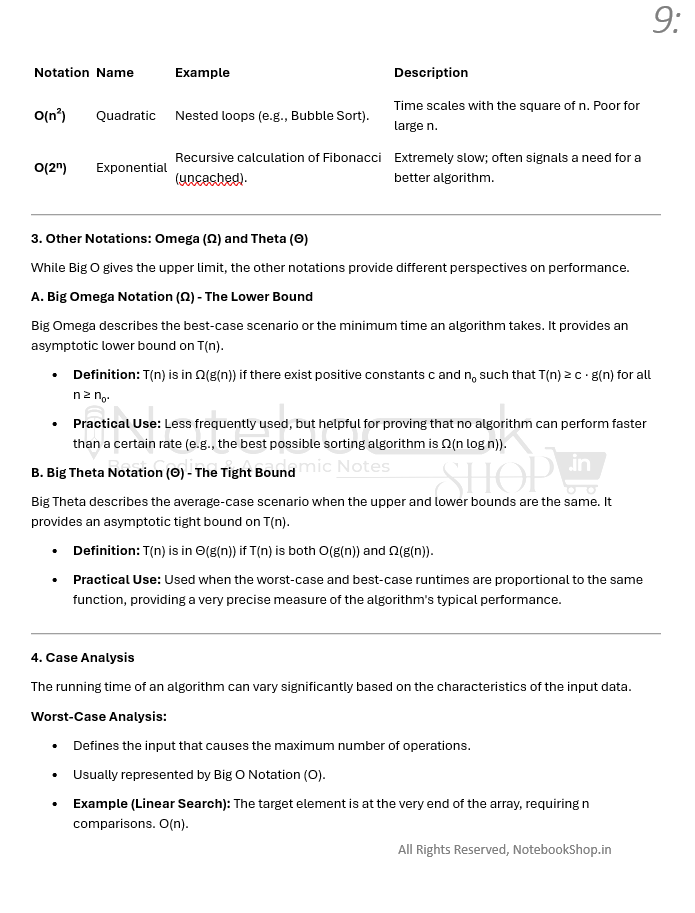
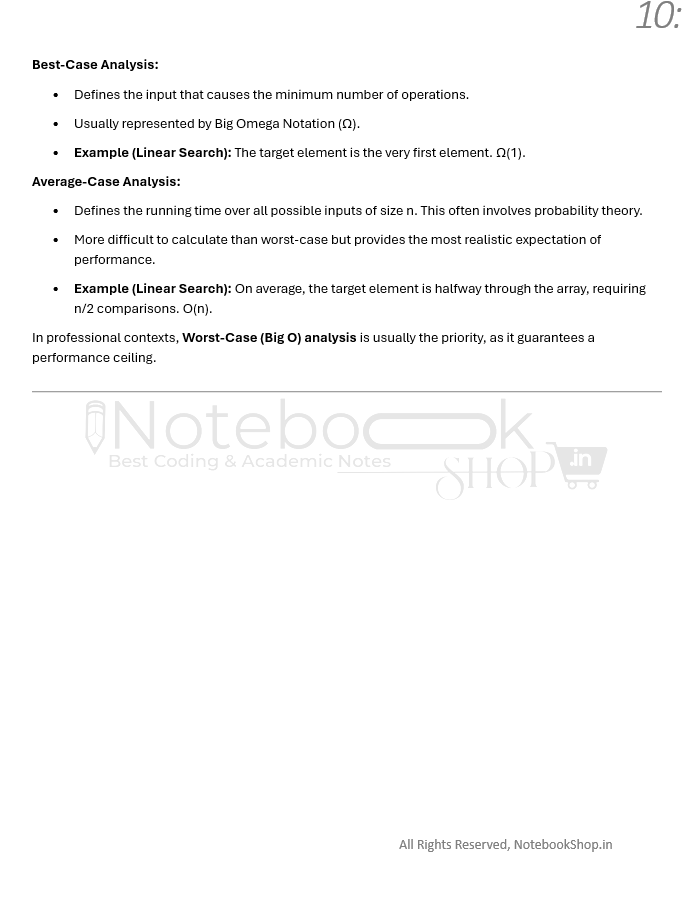
Part 2: Algorithm Analysis
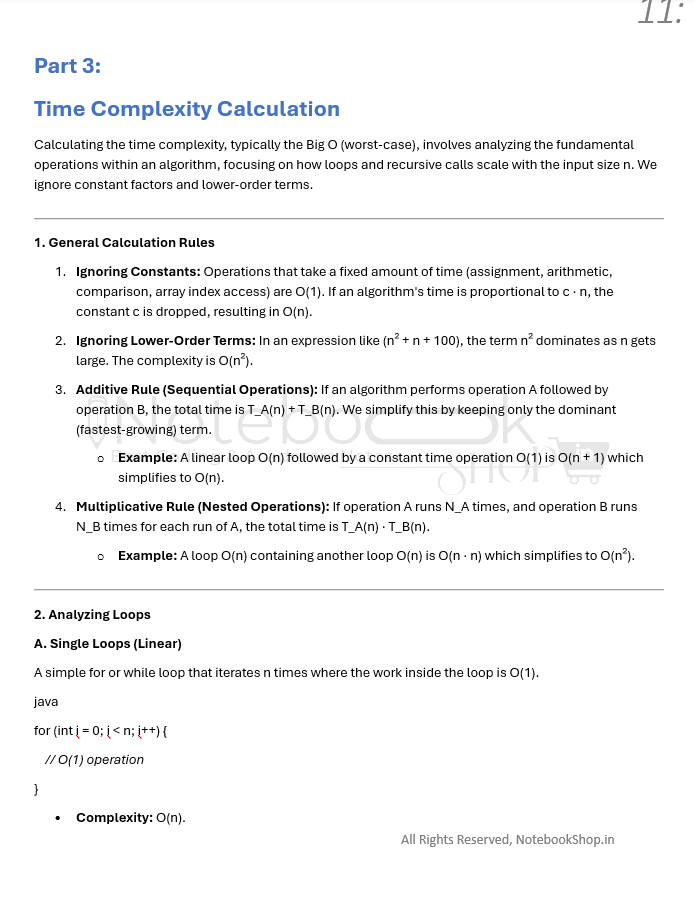
Part 3: Time Complexity Calculation
Part 4: Recursion Fundamentals
Phase II: Linear Data Structures (Parts 5-8)
Focus: Sequential data storage and their practical implementation using Java
Part 5: Arrays and ArrayLists
Part 6: Linked Lists
Part 7: Stacks
Part 8: Queues and Deques
Phase III: Non-Linear Data Structures (Parts 9-12)
Focus: Hierarchical and Hash-based structures crucial for fast lookups
Part 9: Hashing and Hash Tables
Part 10: HashSets and HashMaps in Java
Part 11: Trees Fundamentals
Part 12: Binary Search Trees (BST)
Phase IV: Advanced Trees & Heaps (Parts 13-16)
Focus: Self-balancing structures and priority management
Part 13: Self-Balancing Trees (AVL / Red-Black Overview)
Part 14: Heaps
Part 15: Tries (Prefix Trees)
Part 16: Disjoint Set Union (DSU)
Phase V: Sorting and Searching Algorithms (Parts 17-20)
Focus: Essential algorithms for ordering and efficient retrieval
Part 17: Linear and Binary Search
Part 18: Elementary Sorting Algorithms
Part 19: Efficient Sorting: Merge Sort
Part 20: Efficient Sorting: Quick Sort
Phase VI: Graphs and Graph Algorithms (Parts 21-25)
Focus: Network modeling, traversal, and shortest path problems
Part 21: Graph Representation
Part 22: Graph Traversal: BFS (Breadth-First Search)
Part 23: Graph Traversal: DFS (Depth-First Search)
Part 24: Shortest Path: Dijkstra's Algorithm
Part 25: Minimum Spanning Trees (MST)
Phase VII: Advanced Algorithmic Techniques (Parts 26-30)
Focus: Problem-solving paradigms for complex challenges
Part 26: Greedy Algorithms
Part 27: Divide and Conquer
Part 28: Backtracking and Branch & Bound
Part 29: Dynamic Programming (DP) Fundamentals
Part 30: DP Applications
Basics – Includes 12 Parts
Advanced – Includes Next 18 Parts
In Total: 30 Parts, ~75 Pages (Updated)
Phase I: Foundations & Analysis (Parts 1-4)
Focus: Prerequisites, performance measurement, and recursion basics
Part 1: Prerequisites & Java Review
Part 2: Algorithm Analysis
Part 3: Time Complexity Calculation
Part 4: Recursion Fundamentals
Phase II: Linear Data Structures (Parts 5-8)
Focus: Sequential data storage and their practical implementation using Java
Part 5: Arrays and ArrayLists
Part 6: Linked Lists
Part 7: Stacks
Part 8: Queues and Deques
Phase III: Non-Linear Data Structures (Parts 9-12)
Focus: Hierarchical and Hash-based structures crucial for fast lookups
Part 9: Hashing and Hash Tables
Part 10: HashSets and HashMaps in Java
Part 11: Trees Fundamentals
Part 12: Binary Search Trees (BST)
Phase IV: Advanced Trees & Heaps (Parts 13-16)
Focus: Self-balancing structures and priority management
Part 13: Self-Balancing Trees (AVL / Red-Black Overview)
Part 14: Heaps
Part 15: Tries (Prefix Trees)
Part 16: Disjoint Set Union (DSU)
Phase V: Sorting and Searching Algorithms (Parts 17-20)
Focus: Essential algorithms for ordering and efficient retrieval
Part 17: Linear and Binary Search
Part 18: Elementary Sorting Algorithms
Part 19: Efficient Sorting: Merge Sort
Part 20: Efficient Sorting: Quick Sort
Phase VI: Graphs and Graph Algorithms (Parts 21-25)
Focus: Network modeling, traversal, and shortest path problems
Part 21: Graph Representation
Part 22: Graph Traversal: BFS (Breadth-First Search)
Part 23: Graph Traversal: DFS (Depth-First Search)
Part 24: Shortest Path: Dijkstra's Algorithm
Part 25: Minimum Spanning Trees (MST)
Phase VII: Advanced Algorithmic Techniques (Parts 26-30)
Focus: Problem-solving paradigms for complex challenges
Part 26: Greedy Algorithms
Part 27: Divide and Conquer
Part 28: Backtracking and Branch & Bound
Part 29: Dynamic Programming (DP) Fundamentals
Part 30: DP Applications
 Download now, and make your learning simple, easy, hustle free.