
Data Science AtoZ Notes
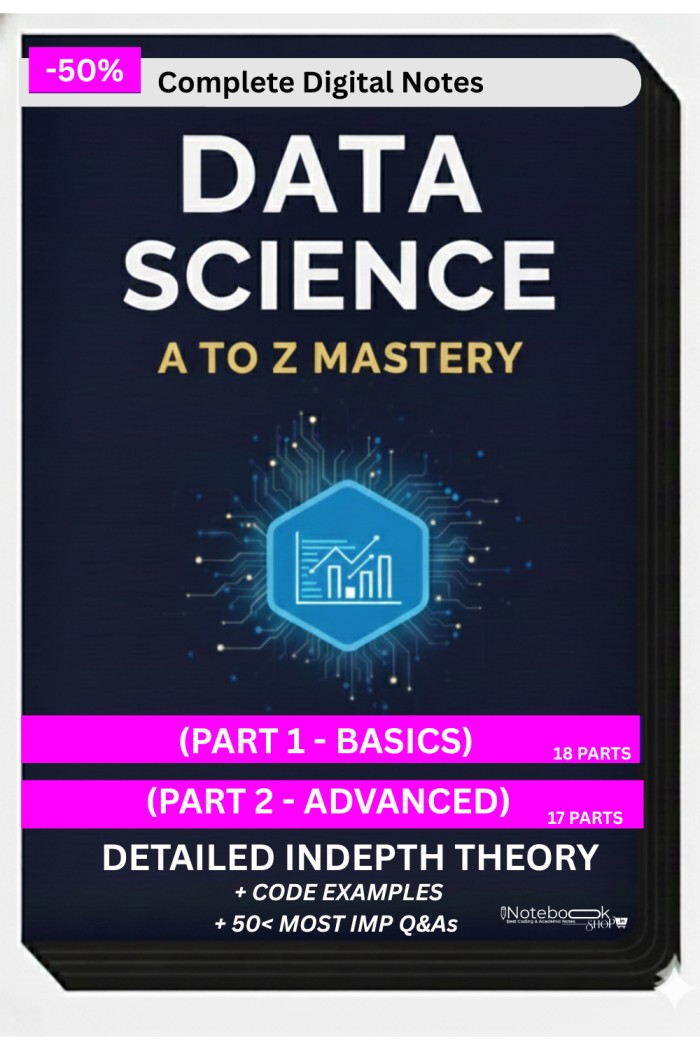
Data Science AtoZ Mastery Notes 
Master Data Science in One Place — 35 Parts of Lessons with Detailed, Indepth Theory + Code Examples + 50< Most Important Interview Oriented Key Q&As ⭐
Syllabus Included in this Ebook👇
Complete Data Science Index (Basic to Advanced)
Basics – Includes 18 Parts
Advanced – Includes Next 17 Parts + 50 Most Imp Q&As
In Total: 35 Parts, 85 Pages (Updated), covering all the topics from basic to advanced + 50 IMP Question & Answers
Phase I: Python Fundamentals for Data Science (Parts 1-5)
Focus: Establishing the programming foundation and core data types in Python
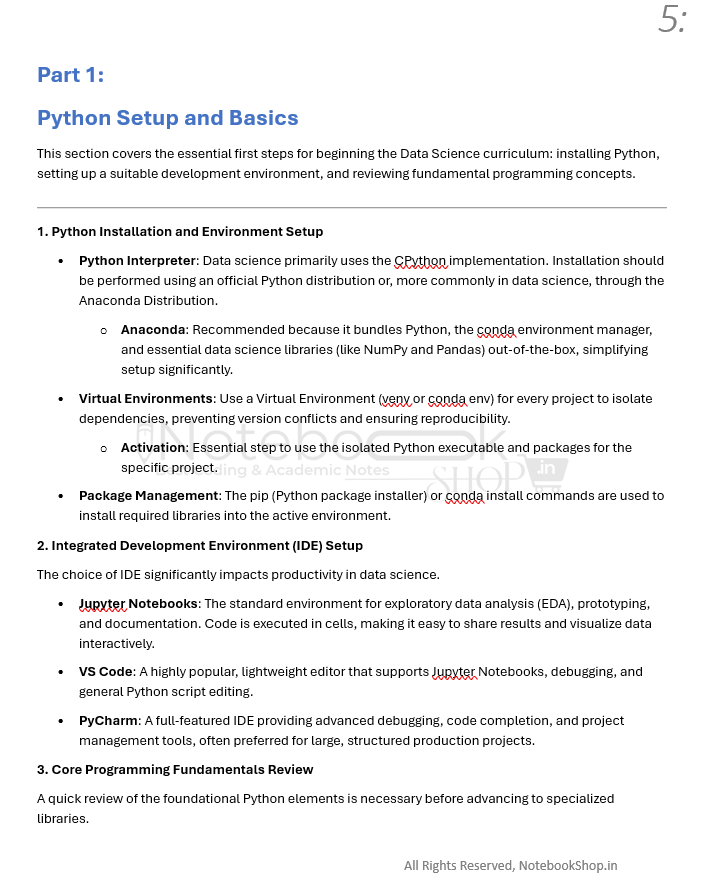
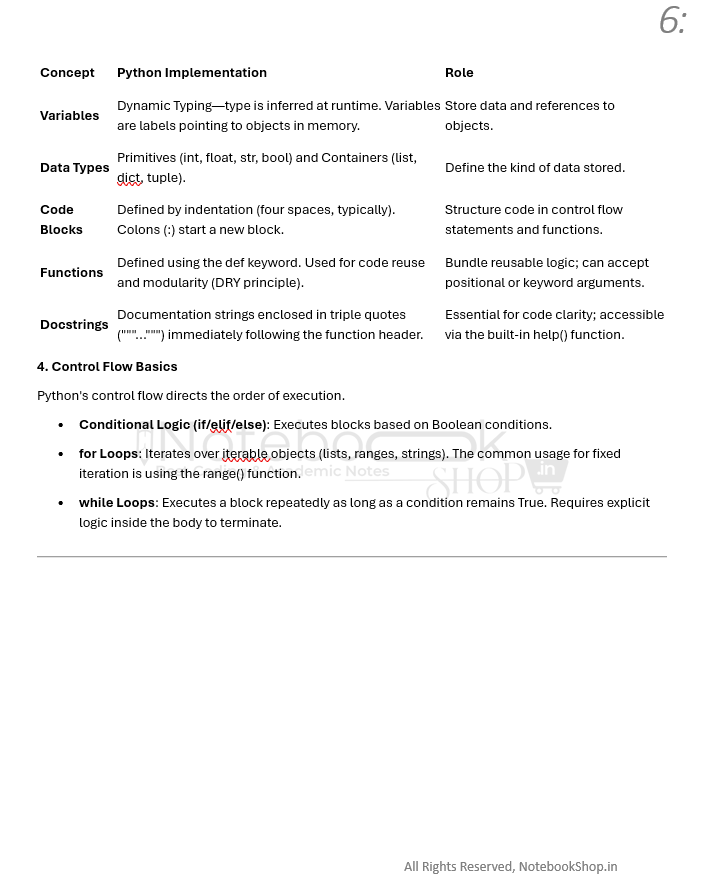
Part 1: Python Setup and Basics
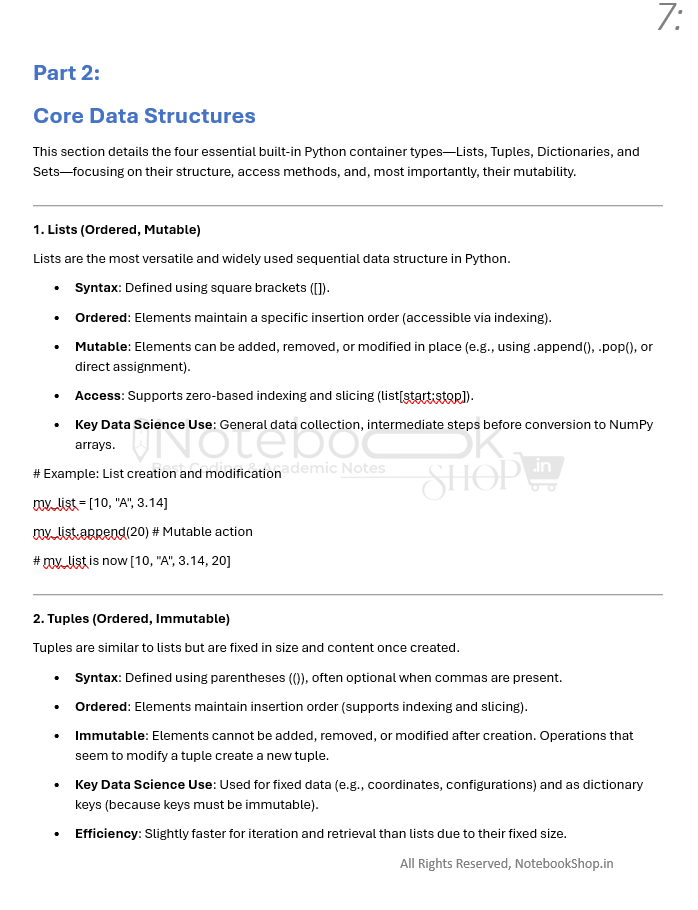
Part 2: Core Data Structures
Part 3: Object-Oriented Programming (OOP)
Part 4: Data I/O and File Handling
Part 5: Lambda Functions, List Comprehensions, and Functional Tools
Phase II: Data Manipulation and Computation (Parts 6-10)
Focus: Mastering the core computational and data structure libraries (NumPy and Pandas)
Part 6: NumPy Fundamentals
Part 7: NumPy Vectorization and Operations
Part 8: Pandas Data Structures
Part 9: Data Cleaning and Preparation
Part 10: Data Aggregation and Merging
Phase III: Statistics and Probability (Parts 11-14)
Focus: The mathematical foundations required for understanding data and model evaluation
Part 11: Descriptive Statistics
Part 12: Probability Fundamentals
Part 13: Statistical Distributions
Part 14: Inferential Statistics and Hypothesis Testing
Phase IV: Data Visualization (Parts 15-18)
Focus: Communicating insights effectively using industry-standard plotting libraries
Part 15: Matplotlib Fundamentals
Part 16: Advanced Matplotlib
Part 17: Seaborn for Statistical Visualization
Part 18: Interactive Visualization (Plotly/Bokeh)
Phase V: Preprocessing and Machine Learning Fundamentals (Parts 19-22)
Focus: Preparing data for modeling and introducing the Machine Learning workflow (Scikit-learn)
Part 19: Feature Engineering and Selection
Part 20: Encoding Categorical Variables
Part 21: Scikit-learn Ecosystem
Part 22: Model Evaluation Metrics
Phase VI: Supervised Learning (Parts 23-27)
Focus: Algorithms used for prediction where the output is known (regression and classification)
Part 23: Linear Regression
Part 24: Logistic Regression
Part 25: Decision Trees
Part 26: Ensemble Methods
Part 27: Support Vector Machines (SVM)
Phase VII: Unsupervised Learning and Advanced Topics (Parts 28-32)
Focus: Algorithms for pattern discovery and reducing data dimensionality
Part 28: Clustering: K-Means
Part 29: Dimensionality Reduction: PCA
Part 30: Time Series Analysis Fundamentals
Part 31: Introduction to Natural Language Processing (NLP)
Part 32: Deep Learning Overview
Phase VIII: MLOps and Project Deployment (Parts 33-35)
Focus: Operationalizing Machine Learning models and professional workflow
Part 33: Model Serialization and Deployment
Part 34: Version Control and Collaboration
Part 35: MLOps and Production Monitoring
In Total: Top 50+ Most Important Interview Oriented Question and Answers Included.
Basics – Includes 18 Parts
Advanced – Includes Next 17 Parts + 50 Most Imp Q&As
In Total: 35 Parts, 85 Pages (Updated), covering all the topics from basic to advanced + 50 IMP Question & Answers
Phase I: Python Fundamentals for Data Science (Parts 1-5)
Focus: Establishing the programming foundation and core data types in Python
Part 1: Python Setup and Basics
Part 2: Core Data Structures
Part 3: Object-Oriented Programming (OOP)
Part 4: Data I/O and File Handling
Part 5: Lambda Functions, List Comprehensions, and Functional Tools
Phase II: Data Manipulation and Computation (Parts 6-10)
Focus: Mastering the core computational and data structure libraries (NumPy and Pandas)
Part 6: NumPy Fundamentals
Part 7: NumPy Vectorization and Operations
Part 8: Pandas Data Structures
Part 9: Data Cleaning and Preparation
Part 10: Data Aggregation and Merging
Phase III: Statistics and Probability (Parts 11-14)
Focus: The mathematical foundations required for understanding data and model evaluation
Part 11: Descriptive Statistics
Part 12: Probability Fundamentals
Part 13: Statistical Distributions
Part 14: Inferential Statistics and Hypothesis Testing
Phase IV: Data Visualization (Parts 15-18)
Focus: Communicating insights effectively using industry-standard plotting libraries
Part 15: Matplotlib Fundamentals
Part 16: Advanced Matplotlib
Part 17: Seaborn for Statistical Visualization
Part 18: Interactive Visualization (Plotly/Bokeh)
Phase V: Preprocessing and Machine Learning Fundamentals (Parts 19-22)
Focus: Preparing data for modeling and introducing the Machine Learning workflow (Scikit-learn)
Part 19: Feature Engineering and Selection
Part 20: Encoding Categorical Variables
Part 21: Scikit-learn Ecosystem
Part 22: Model Evaluation Metrics
Phase VI: Supervised Learning (Parts 23-27)
Focus: Algorithms used for prediction where the output is known (regression and classification)
Part 23: Linear Regression
Part 24: Logistic Regression
Part 25: Decision Trees
Part 26: Ensemble Methods
Part 27: Support Vector Machines (SVM)
Phase VII: Unsupervised Learning and Advanced Topics (Parts 28-32)
Focus: Algorithms for pattern discovery and reducing data dimensionality
Part 28: Clustering: K-Means
Part 29: Dimensionality Reduction: PCA
Part 30: Time Series Analysis Fundamentals
Part 31: Introduction to Natural Language Processing (NLP)
Part 32: Deep Learning Overview
Phase VIII: MLOps and Project Deployment (Parts 33-35)
Focus: Operationalizing Machine Learning models and professional workflow
Part 33: Model Serialization and Deployment
Part 34: Version Control and Collaboration
Part 35: MLOps and Production Monitoring
In Total: Top 50+ Most Important Interview Oriented Question and Answers Included.
 Download now, and make your learning simple, easy, hustle free.