
Data Analytics AtoZ Notes
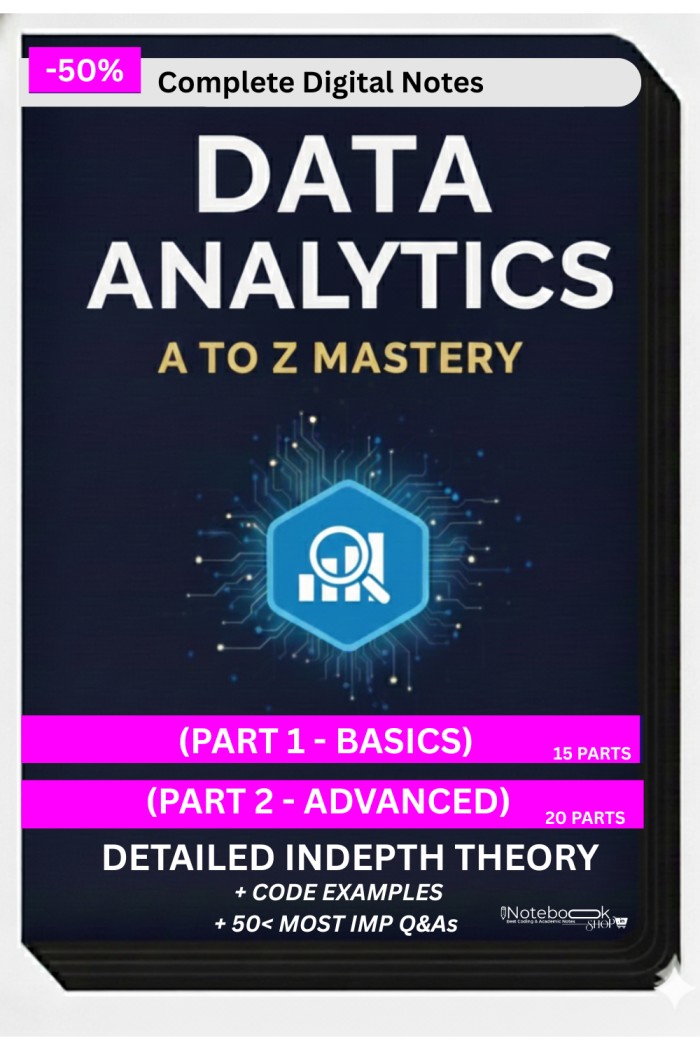
Data Analytics AtoZ Mastery Notes 
Master Data Analytics in One Place — 35 Parts of Lessons with Detailed, Indepth Theory + Code Examples + 50< Most Important Interview Oriented Key Q&As ⭐
Syllabus Included in this Ebook👇
Complete Data Analytics Index (Basic to Advanced)
Basics – Includes 15 Parts
Advanced – Includes Next 20 Parts + 50 Q&As
In Total: 35 Parts, 85 Pages (Updated), covering all the topics from basic to advanced + 50 IMP Question & Answers
Phase I: Foundations and Programming Basics (Parts 1-5)
Focus: Establishing the programming foundation and the analytics mindset
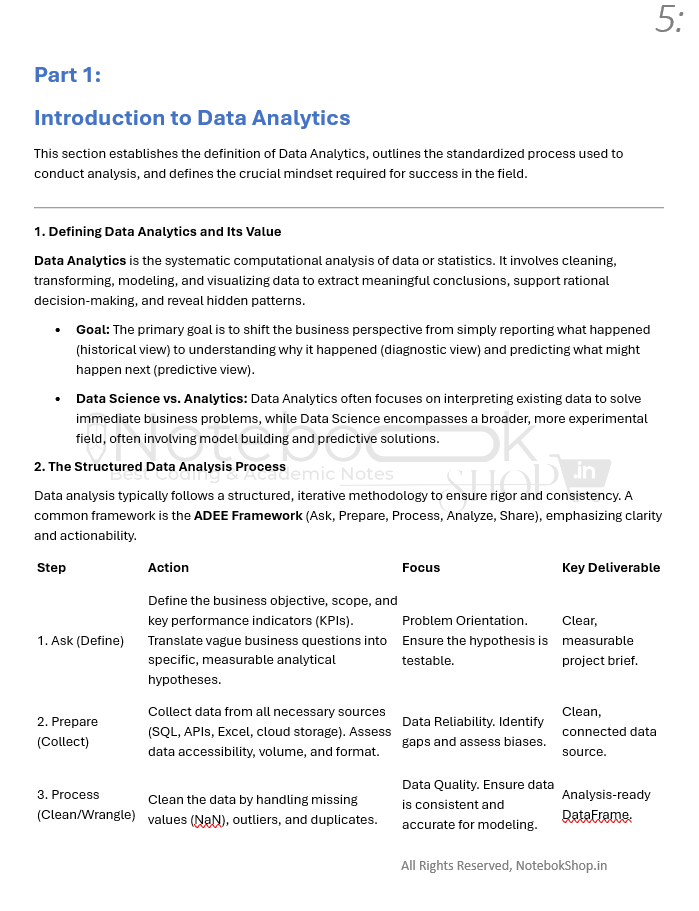
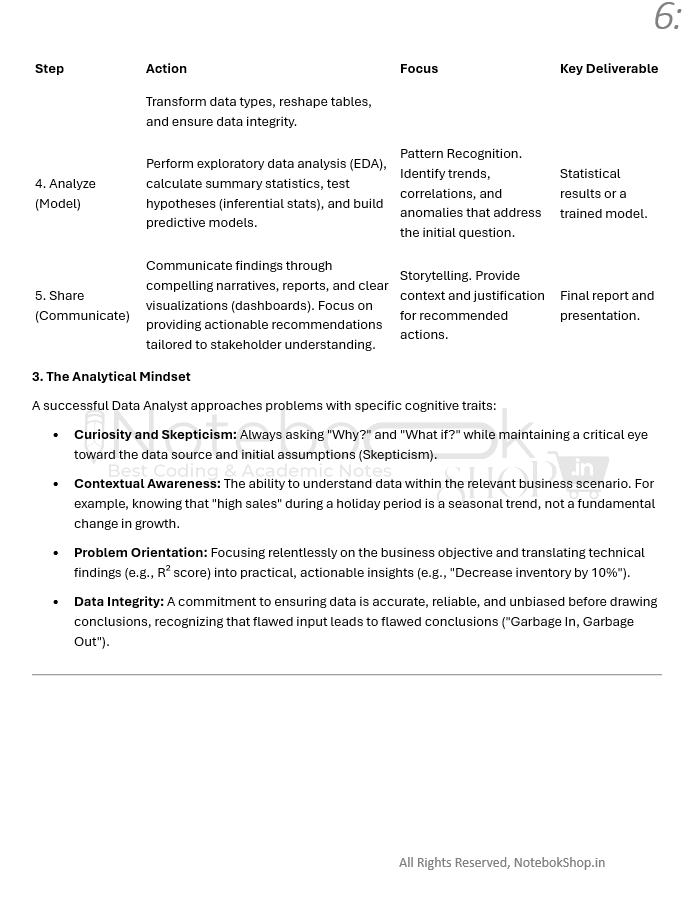
Part 1: Introduction to Data Analytics
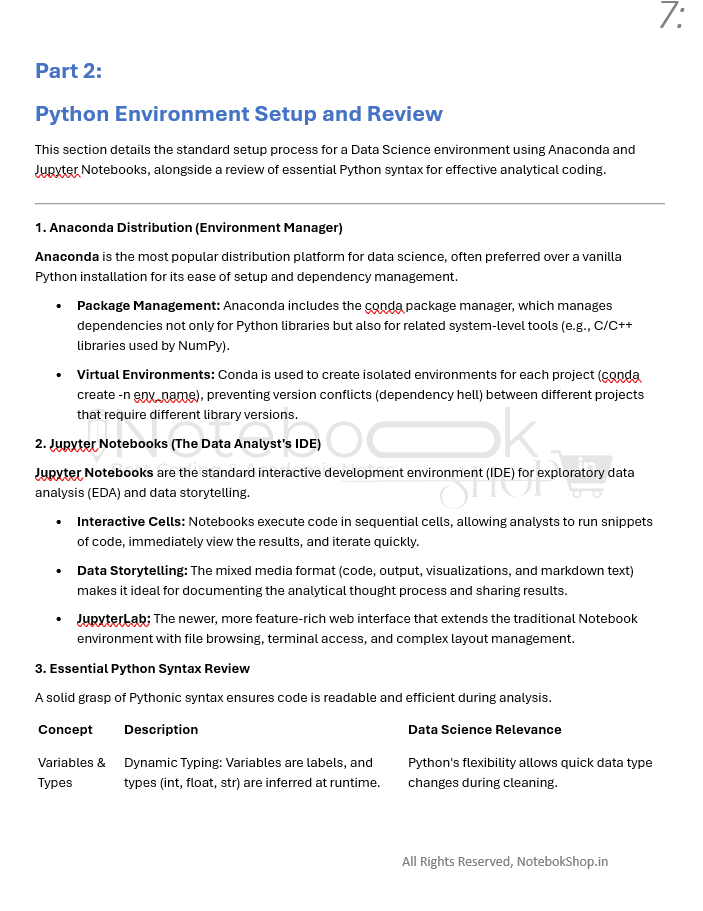
Part 2: Python Environment Setup
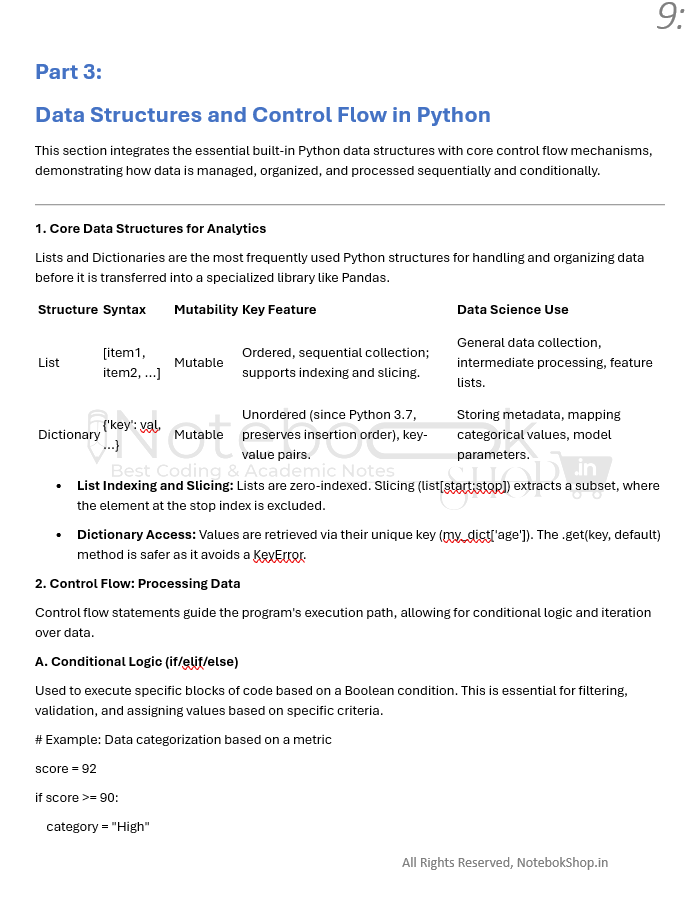
Part 3: Data Structures and Control Flow in Python
Part 4: Version Control Basics
Part 5: Introduction to R (Conceptual)
Phase II: Data Acquisition and SQL Mastery (Parts 6-10)
Focus: The most crucial skill for an analyst—retrieving and querying data from databases
Part 6: Introduction to Databases and SQL
Part 7: Filtering and Sorting Data in SQL
Part 8: Aggregation and Grouping in SQL
Part 9: Joining Tables (SQL Joins)
Part 10: Advanced SQL
Phase III: Data Wrangling with Python (Parts 11-15)
Focus: Cleaning, transforming, and preparing data for analysis using industry-standard libraries
Part 11: NumPy for Numerical Data
Part 12: Pandas DataFrames
Part 13: Data Cleaning and Missing Data
Part 14: Data Transformation and Feature Creation
Part 15: Merging, Reshaping, and Time Series Data
Phase IV: Statistical Analysis and Interpretation (Parts 16-20)
Focus: Applying statistical techniques to interpret data and draw valid conclusions
Part 16: Descriptive Statistics
Part 17: Sampling and Probability
Part 18: Hypothesis Testing
Part 19: Correlation and Introduction to Regression
Part 20: Predictive Modeling Basics
Phase V: Data Visualization Tools (Parts 21-25)
Focus: Creating compelling visualizations for exploration and communication
Part 21: Python Visualization: Matplotlib
Part 22: Python Visualization: Seaborn
Part 23: Data Storytelling Principles
Part 24: Introduction to Tableau/Power BI
Part 25: Creating Basic Visualizations in Tableau/Power BI
Phase VI: Advanced Visualization and Reporting (Parts 26-30)
Focus: Building interactive dashboards and mastering business intelligence tools
Part 26: Calculated Fields and LOD Expressions
Part 27: Parameters and Filters
Part 28: Dashboard Design Principles
Part 29: Time Series Analysis and Forecasting
Part 30: Geospatial Analysis
Phase VII: Automation, Presentation, and Career (Parts 31-35)
Focus: Automating workflows, delivering insights, and professional development
Part 31: Data Quality and ETL/ELT Concepts
Part 32: Web Scraping for Data Acquisition
Part 33: Automation with Python/R Scripts
Part 34: Presenting and Explaining Insights
Part 35: Case Studies and Portfolio Development
In Total: Top 50+ Most Important Interview Oriented Question and Answers Included.
Basics – Includes 15 Parts
Advanced – Includes Next 20 Parts + 50 Q&As
In Total: 35 Parts, 85 Pages (Updated), covering all the topics from basic to advanced + 50 IMP Question & Answers
Phase I: Foundations and Programming Basics (Parts 1-5)
Focus: Establishing the programming foundation and the analytics mindset
Part 1: Introduction to Data Analytics
Part 2: Python Environment Setup
Part 3: Data Structures and Control Flow in Python
Part 4: Version Control Basics
Part 5: Introduction to R (Conceptual)
Phase II: Data Acquisition and SQL Mastery (Parts 6-10)
Focus: The most crucial skill for an analyst—retrieving and querying data from databases
Part 6: Introduction to Databases and SQL
Part 7: Filtering and Sorting Data in SQL
Part 8: Aggregation and Grouping in SQL
Part 9: Joining Tables (SQL Joins)
Part 10: Advanced SQL
Phase III: Data Wrangling with Python (Parts 11-15)
Focus: Cleaning, transforming, and preparing data for analysis using industry-standard libraries
Part 11: NumPy for Numerical Data
Part 12: Pandas DataFrames
Part 13: Data Cleaning and Missing Data
Part 14: Data Transformation and Feature Creation
Part 15: Merging, Reshaping, and Time Series Data
Phase IV: Statistical Analysis and Interpretation (Parts 16-20)
Focus: Applying statistical techniques to interpret data and draw valid conclusions
Part 16: Descriptive Statistics
Part 17: Sampling and Probability
Part 18: Hypothesis Testing
Part 19: Correlation and Introduction to Regression
Part 20: Predictive Modeling Basics
Phase V: Data Visualization Tools (Parts 21-25)
Focus: Creating compelling visualizations for exploration and communication
Part 21: Python Visualization: Matplotlib
Part 22: Python Visualization: Seaborn
Part 23: Data Storytelling Principles
Part 24: Introduction to Tableau/Power BI
Part 25: Creating Basic Visualizations in Tableau/Power BI
Phase VI: Advanced Visualization and Reporting (Parts 26-30)
Focus: Building interactive dashboards and mastering business intelligence tools
Part 26: Calculated Fields and LOD Expressions
Part 27: Parameters and Filters
Part 28: Dashboard Design Principles
Part 29: Time Series Analysis and Forecasting
Part 30: Geospatial Analysis
Phase VII: Automation, Presentation, and Career (Parts 31-35)
Focus: Automating workflows, delivering insights, and professional development
Part 31: Data Quality and ETL/ELT Concepts
Part 32: Web Scraping for Data Acquisition
Part 33: Automation with Python/R Scripts
Part 34: Presenting and Explaining Insights
Part 35: Case Studies and Portfolio Development
In Total: Top 50+ Most Important Interview Oriented Question and Answers Included.
 Download now, and make your learning simple, easy, hustle free.